
The Best Channel Manager for Independent Hotels (By Property Type + Budget)
When you sell rooms on one booking site, you can usually manage it inside that site. But as soon as you add a second site, the work doesn’t double. It multiplies exponentially.
You start repeating the same tasks in multiple places:
- updating availability
- changing prices
- closing out dates
- fixing mistakes after the fact
The best channel manager syncs availability, rates, and basic booking rules across multiple booking sites. It saves you time, grows your distribution, and helps you make more money.
It’s important to know up front: many channel managers are part of a property management system (PMS). That’s why shopping feels confusing. You’re often choosing between:
- an all-in-one system (PMS + channel manager together), or
- a standalone channel manager that connects to your PMS.
A Note on OTAs
Online travel agencies (OTAs) like Booking.com and Expedia are a normal part of hotel distribution. They get you in front of guests who don’t yet know you. However, they also take a commission, typically 15–30 (depending on platform, region, and program).
That commission is a necessary pain point for most independents. But you don’t have to live with it forever.
The smart move is to treat OTAs like the top of your funnel and start “compounding” from day one:
- Use OTAs to win the first stay.
- Deliver a great stay so the guest wants to return.
- Collect guest details.
- Follow up after the stay with a reason to book direct next time.
A simple Customer Relationship Manager will help you build relationships and drive direct bookings. The sooner you start, the sooner the effects begin to compound.
When to Consider a Channel Manager
Consider a channel manager when any of these become true:
- You’re selling on two or more booking sites.
- You’re afraid to open availability because you might overbook.
- You’re spending too much time manually updating rates and availability.
- You’re missing revenue because you keep rooms “held back” to stay safe.
A channel manager is a control tool that lowers the operational headache of selling in more places.
Channel Manager vs Property Management System
Here’s the simplest way to think about it:
- Channel manager: distribution control across booking sites (availability, rates, rules).
- Property management system (PMS): runs the property workflows (reservations calendar, front desk flow, housekeeping coordination, reporting).
For most hotels, beyond a very simple operation, the PMS becomes your “home base,” and the channel manager is either built in or connected.
How to Choose (Simple Checklist)
Use these questions to help you choose a channel manager:
- Does it support your top booking sites in your region?
Ask for examples of properties like yours using those connections. - Can you set up room types and rate plans without workarounds?
If setup is confusing, daily management will be confusing. - Can it handle the booking rules you actually use?
Minimum stays, closeouts, stop-sell dates, etc. - How do you spot problems fast?
If one channel doesn’t update, how will you know? - Can your team run it day to day?
Ask to see a normal morning workflow, not just the admin screen. - How does pricing scale?
Rooms, channels, properties, users—what drives cost increases? - How does onboarding work?
Who sets up mapping and testing? What support do you get in the first month?
The Best Channel Manager for Independent Hotels
This is our ranked and reviewed list of the best channel manager for independent hotels, based on real user reviews.
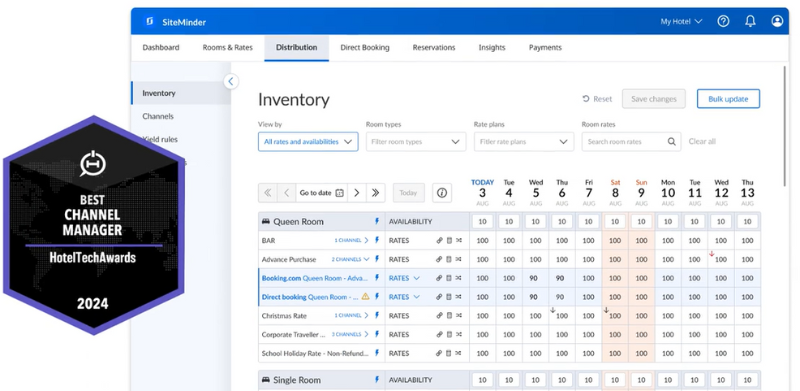
#1 — Best Overall for Most Independent Hotels: SiteMinder
Best for:
A single independent hotel (small to large) that wants to sell on major OTAs, keep availability/rates consistent, and reduce the “extranet shuffle.” This is the most common profile: you’re operationally busy, you want broad channel reach, and you want a tool that lots of hotels already use globally.
Why this is a strong “overall” pick:
- Hotel Tech Report ranks SiteMinder #1 among Channel Managers, with a large review base (4.6 rating, 2,758 reviews) and usage across a range of hotel sizes.
What reviewers repeatedly mention
- Pros: easy to use and saves time managing distribution (review summaries frequently highlight usability and distribution control).
- Cons: reporting depth and some integration friction are identified as areas for improvement.
What to confirm in a demo (so it fits your hotel)
- Which OTAs matter most for you (not “450+ channels”), and how your exact channels behave.
- How you’ll structure rate plans and rules without constant manual patching.
- What your “problem alert” looks like when something fails to sync.
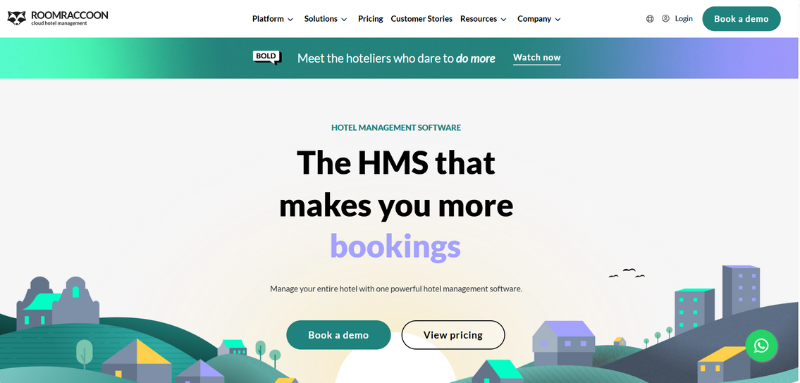
#2 — Best for Boutique Hotels That Want a Clean All-in-One: RoomRaccoon
Best for:
A boutique hotel (typically 10–60 rooms) that wants fewer systems, a clean front desk workflow, and one place to run reservations + distribution without stitching multiple vendors together.
What the review footprint looks like:
- RoomRaccoon shows 4.4 stars on G2, with a smaller set of verified reviews .
What reviewers repeatedly mention
- Pros: user-friendly onboarding and support are common positives across review sources and vendor-collected review pages.
- Cons: users mention occasional performance issues/glitches and a learning curve.
What to confirm in a demo
- How the system behaves during the messiest moments: modifications, cancellations, no-shows, and reassignments.
- How do you handle multi-night reservations and rate changes without creating confusion for staff?
- What does support response look like when something breaks on a weekend?
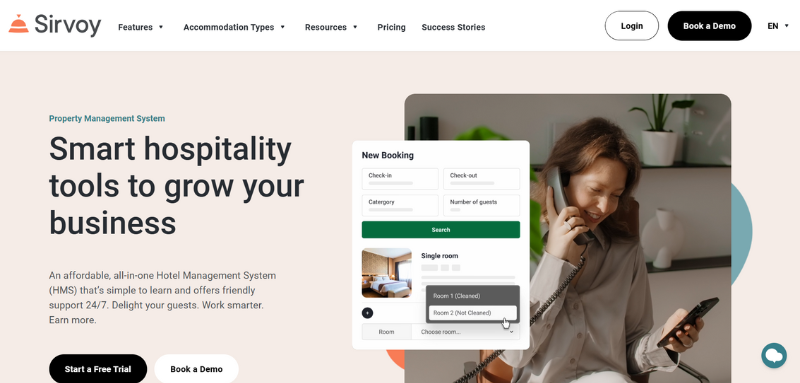
#3 — Best Budget Pick for Small Properties Starting Out: Sirvoy
Best for:
A small independent hotel, guesthouse, or B&B that needs a simple setup, a clear reservations calendar, and basic channel syncing—without paying for complexity you won’t use in year one.
What the review footprint looks like:
- Capterra’s product page summary references 134 reviews and highlights efficiency, usability, and affordability as frequent themes.
What reviewers repeatedly mention
- Pros: “intuitive,” “not complicated to get up and running,” and fast support responses show up in review text.
- Cons: Some users want a more streamlined mobile experience.
What to confirm in a demo
- Your exact channel list and how the sync behaves (especially during same-day changes).
- Whether the workflow aligns with how you operate today (owner-run vs. front desk team).
- What you’ll outgrow first (reporting, multi-property, advanced rules), so you can plan ahead.
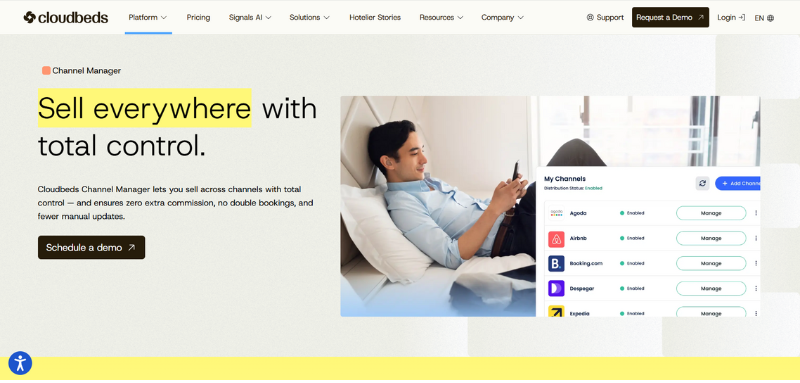
#4 — Best for Growth Across Multiple Properties: Cloudbeds
Best for:
An operator running one property now (or moving toward 2–5 properties) who wants one system for daily operations plus distribution, and wants multi-property control without rebuilding the process every time you add a new location.
What the review footprint looks like:
- G2 gives Cloudbeds a 4.3 rating with 38 reviews.
What reviewers repeatedly mention
- Pros: “all-in-one” convenience, ease of use, and multi-property switching/control.
- Cons: users note that costs can rise as you add modules, and some modules (e.g., housekeeping, revenue tools) could be stronger.
What to confirm in a demo
- The exact pricing structure for your plan: what’s included vs. add-ons.
- Multi-property controls: permissions, switching between properties, and reporting roll-ups.
- How distribution changes when you add room types, packages, or seasonal pricing.
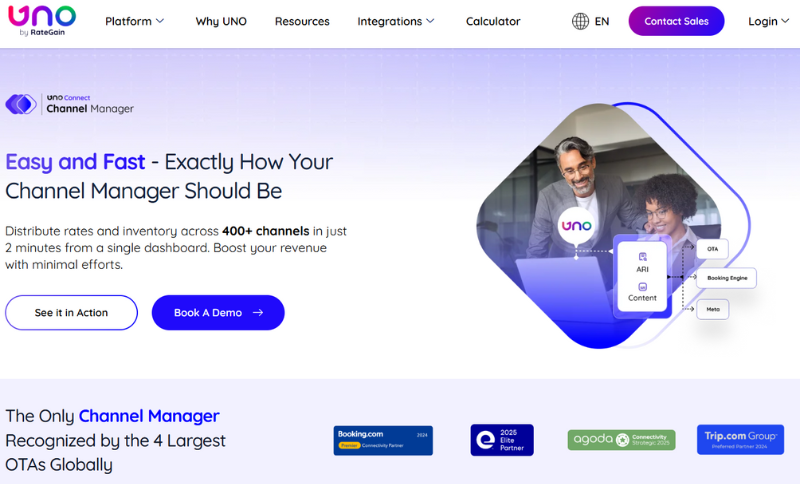
#5 — Best for Multi-Property Groups That Need Serious Distribution Control: RateGain
Best for:
A small group or larger independent (multiple properties, complex channel mix, or strong revenue discipline) that wants tighter control of distribution performance and more advanced distribution governance.
What the review footprint looks like:
- Hotel Tech Report lists RateGain Channel Manager at 4.7 rating with 595 reviews, with reviewer coverage heavily represented in the Asia Pacific.
What reviewers repeatedly mention
- Pros: strong distribution control (rates, restrictions, inventory), dashboards, and support/onboarding guidance.
- Cons: some users mention occasional delays in updates/connectivity issues, and a desire for performance improvements.
What to confirm in a demo
- How you monitor update delays and how the system flags channel failures?
- Multi-property controls and who owns what (roles/permissions).
- The onboarding plan: mapping, testing, and go-live support across properties.
Switching Over
Before you switch to a new channel manager, make sure you:
- Clean up inventory first.
Room types and rate plans should be consistent. Messy inputs create messy distribution. - Map and test before you go live everywhere.
Test a real booking, a modification, and a cancellation. Confirm what your staff sees. - Start with 1–2 channels, then expand.
Stabilize on your core channels first. Add the rest once you trust the workflow. - Assign weekly channel checks.
One owner. One routine. This is where you catch revenue leaks early.
Common Mistakes
- Adding more channels before rate plans and rules are standardized.
- Expanding distribution without monitoring for sync failures.
- Letting OTAs become the only plan.
- Choosing software based on “features” instead of setup fit and daily usability.
Next Step: Use OTAs for Discovery, Then Build Direct Bookings
If you’re implementing a channel manager, you’re choosing to compete on booking sites. That’s normal. OTAs bring discovery. They also bring commission pressure—often 15–30%.
The long-term move is simple:
OTA guest → great stay → relationship → direct rebooking
Thats what a CRM like Hotel Growth Engine allows you to do. Your Channel Manager handles distribution, while a hotel CRM helps you build relationships.