Stop Overthinking Guest Messaging: Simple Principles to Get You Started Today
Guest messaging is the one thing every hotel knows it should do, and almost nobody starts.
Not because the idea is wrong. Because operations wins. Every day. By the time you’ve handled staffing, rooms, guest issues, and tomorrow’s arrivals, “set up messaging” feels like a project you’ll get to later.
Then you look at the options—email, SMS, WhatsApp—plus timing, templates, personalization, automations, replies. It turns into information overload, so nothing ships.
This article will help you simplify this. It includes:
- Three simple principles that keep you moving.
- A clear way to choose between email and SMS/WhatsApp.
- The right timing based on how your guests plan their trip.
- The single highest-ROI first message most hotels should start with.
The goal is not to build a full program. It’s to start with one message that reduces friction, reduces staff workload, and can still run during a busy week.
Don’t let these excuses stop you!
Most hotels don’t start guest messaging for reasons that sound practical in the moment:
- “We’re too busy.”
You will stay busy. Messaging has to start small enough to run during busy weeks. - “We don’t have time to set it up.”
That usually means you’re trying to set up too much. Start with one message. - “We don’t know what to send.”
Start with what guests ask you every day: directions, arrival, parking, check-in, late arrival. - “We’ll do it after high season / after renovations / after we hire someone.”
There is always a next operational milestone. If you wait for a clear calendar, it won’t start. - “Our data is messy.”
Your first message doesn’t need perfect segmentation. It needs the basics and a reliable trigger or list. - “We don’t want to spam guests.”
Good. That’s why you start with one useful message that reduces confusion. - “We tried email once and it didn’t work.”
One send isn’t a system. The win comes from a message that runs consistently and improves over time. - “We should probably do WhatsApp/SMS because that’s what people use now.”
Only if you can support replies. Otherwise start with email and add messaging apps when it fits your capacity.
Start with one message that removes friction and can run even when the hotel is busy.
Three principles to keep you moving
Principle 1: Starting beats planning
Your first version should be simple enough to launch quickly. Once something is running, you can improve it based on what guests actually do and what your team actually has time to support.
Principle 2: Keep it simple. Don’t let complexity derail you!
The most common failure mode is trying to do everything at once: multiple channels, perfect personalization, too many message types, too many edge cases. The “best” plan is the one you can actually run.
Principle 3: If you can’t run it in a busy week, it isn’t a system!
If your guest messaging depends on manual list exports, constant edits, and perfect follow-through, it will stop the moment operations get tight. The only messaging that compounds is messaging that keeps running.
You can build a system yourself, or use a Hotel Customer Relationship Manager like Hotel Growth Engine to ensure consistency.
Either way, the standard is the same: it must survive real-world hotel life.
Why you shouldn’t start with a newsletter
A newsletter feels like the obvious “hotel marketing” move.
It’s the wrong first step!
Newsletters require ongoing content creation, design effort, and a consistent publishing rhythm. They also don’t map cleanly to what guests actually need help with.
The result is predictable: you send one or two, then things get busy, and it disappears.
The best first messages are not “news.” They are practical. They reduce repeated questions. They prevent arrival confusion. They make the stay smoother.
The kind of messaging that creates immediate operational ROI.
Pick the right guest messaging channel by job, timing, and market
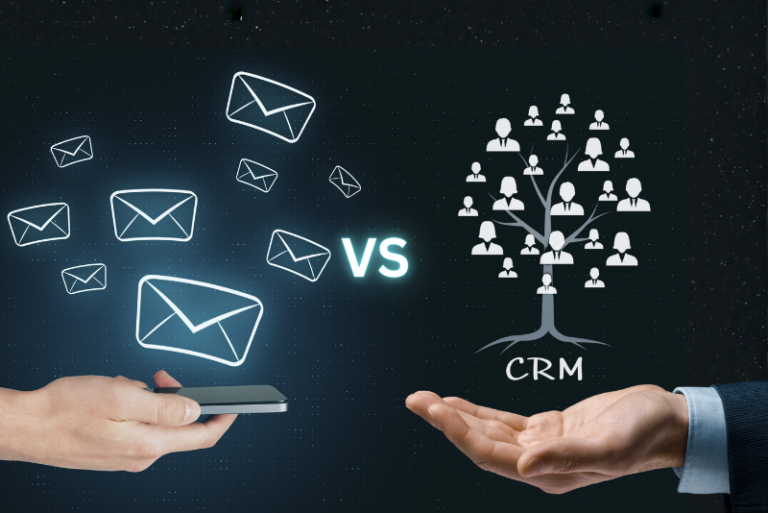
Most channel confusion disappears when you separate messaging into two categories:
- Reference Information
- Immediate Interaction
Reference information: use email
Use email when the message contains detailed information and is something the guest will want to refer to later. Pre-arrival planning is the classic example. Guests need directions, transportation options, parking flow, check-in basics, and clear instructions on what to do if they arrive late.
Immediate interaction: use SMS or WhatsApp
Use SMS/WhatsApp when the message is short and requires action upon arrival or during the stay. These channels win in the last mile because guests see them on their phones when they need them: door codes, pickup prompts, quick confirmations, “we’re on our way” coordination, or a simple in-house request.
Think of it this way:
- Email is the message guests can search for later and use as a mini guide.
- SMS/WhatsApp is the tap on the shoulder that matters right now.
SMS vs WhatsApp depends on the guest
SMS and WhatsApp do the same job. The difference is what guests use naturally.
As a general rule:
- SMS is stronger in North America.
- WhatsApp is stronger across Asia and many international inbound markets.
Start with the channel your guests already use daily. Don’t make the guest learn a new behavior just to get basic information from you.
How to choose your first guest messaging channel
Ask one question:
Do you need a fast reply from the guest?
- If no, start with email.
- If yes, use SMS/WhatsApp (only if you can support consistent replies).
Start where the ROI is highest: remove the biggest guest friction point
At the start, don’t ask, “What should we send?” Ask, “What costs us the most time every week?”
Most hotels have a few repeating friction points:
- “How do I get there?”
- “Where do I park?”
- “What time is check-in?”
- “We’re arriving late, what do we do?”
- pickup coordination
- last-mile access questions
Solving these are high-ROI. They create operational noise and guest stress simultaneously. The best first message is the one that removes the most friction with the least effort.
Pre-arrival message timing depends on your market
“Pre-arrival” doesn’t mean “three days before.” It means “when guests start making plans.”
For a planning-heavy destination stay – A ski resort in a non-English speaking country for example—guests are thinking about transport, timing, gear, and schedules well in advance. The useful window may be 30–60 days out. If you wait until the week of arrival, you miss the planning stage, and the message doesn’t do its job.
For short-lead city stays, the planning window can be much closer, often 3–7 days out.
The point is to send the message early enough to reduce friction, not just early enough to feel like “pre-arrival.”
What your first pre-arrival email should include
Keep the first version simple. The goal is to reduce work while improving the guest experience.
Include:
- One clear map/direction link
- Arrival and parking basics (only if those generate questions)
- Check-in window and clear late-arrival instructions guests can follow without back-and-forth.
- One link to a single “Arrival Details” page on your site (your source of truth)
If you include anything, it should pass one test: does this reduce friction without creating more staff work?
How to automate guest messaging without creating more work
Automation is the difference between “we should do this” and “this runs every day.”
You have two practical paths. The right choice depends on how busy you are, how complex your operation is, and how much you want this to compound over time.
Option 1: Automate inside your PMS
Many hotels start here because it’s already in place.
Use PMS messaging when:
- You want the simplest possible setup.
- You mainly need basic pre-arrival messages and confirmations.
- You don’t need much segmentation or multi-language branching.
- You can live with “one size fits most” templates.
The upside is speed. The downside is you may hit limits fast when you want better timing, better targeting, or a more consistent experience across properties and channels.
Option 2: Use a CRM built for hotel guest messaging
This is for hotels that want automation to compound, not reset.
Use a Hotel CRM when:
- Auto-send from reservation events (booked, arriving, in-house, departed).
- Keep messages accurate when bookings change (dates, cancellations, notes).
- Reuse controlled templates so you don’t rebuild every season.
- Set timing rules that match your hotel and market (early planning and close-in).
- Drive more profit per guest by shifting repeat and rebookings to direct, instead of paying commissions again.
In practice, this is where Hotel Growth Engine fits: it keeps the basics running when operations are busy, so one automation compounds into more direct revenue over time.
The simplest way to start
Don’t start by building “a program.” Start by automating one message.
- Choose your first message (for most hotels: a pre-arrival email that reduces repeated questions).
- Choose the timing window that matches your hotel (planning-heavy stays might be 30–60 days out; short-lead stays might be 3–7 days out).
- Keep the content standardized so it doesn’t require constant edits.
- Let it run. Improve it later.
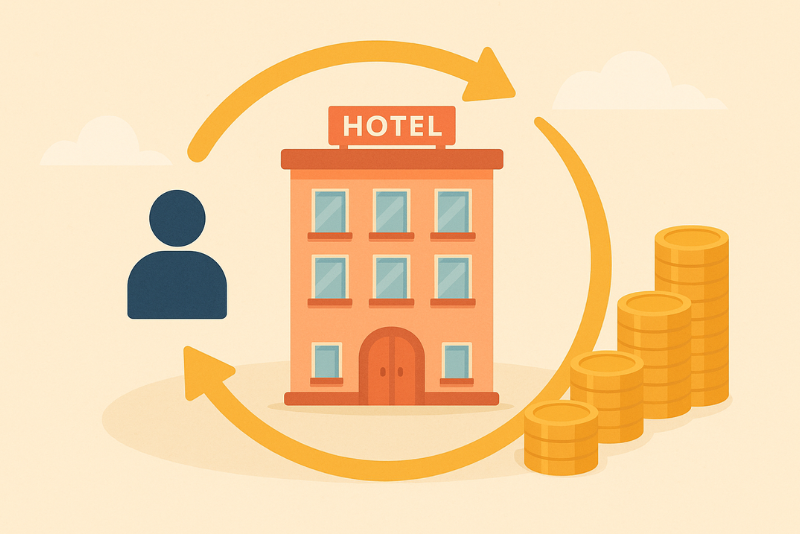
That’s the compounding loop.
Pass the busy-week test and compound over time
Guest messaging doesn’t work when it’s treated as a creative project. It works when it’s treated as a small, recurring operational advantage.
Start simple. Make it survivable. Put one message in place that runs during a busy week and reduces friction for guests and staff. That’s how messaging compounds.
Once it’s running, you can improve timing and clarity. Then you can add the next message. Over time, you can expand into SMS/WhatsApp for last-minute messaging if it fits your market and staffing realities.
If you want this to run consistently without becoming another task list, you can stitch it together yourself—or use Hotel Growth Engine to keep the basics automated and reliable when the hotel gets busy.
Get your first automation live and keep it running
If guest messaging keeps slipping because the hotel is busy, you don’t need more ideas. You need one automation that runs without you.
Hotel Growth Engine helps hotels put the first message on rails, connect it to reservation events, and keep it consistent throughout high season—so the work compounds instead of restarting every month.