The Relationship Advantage – Why Hotel Guest Relationships Matter
Why Hotel Guest Relationships Matter – Because independent hotels that invest in guest relationships outperform those that simply invest in speed!
The operating reality most hotel owners know too well
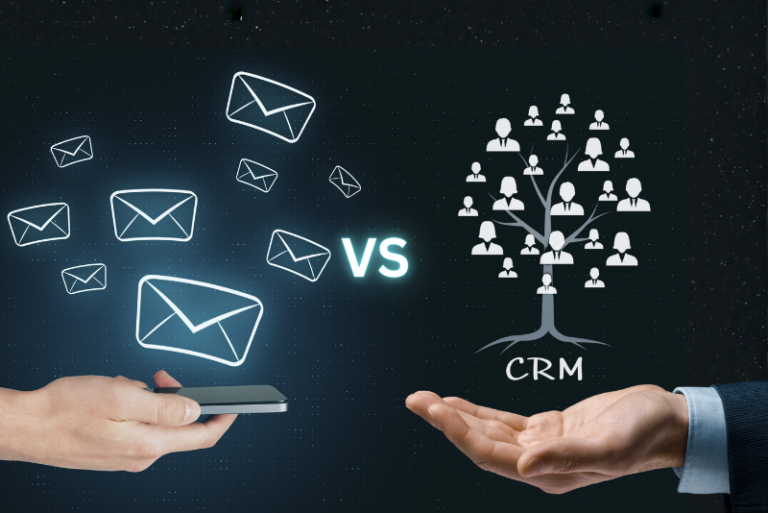
Messages come in from every direction. A booking inquiry on WhatsApp. A complaint on the OTA platform. A check-in request by email. A guest asking about late checkout via the website chat.
Your staff is switching between tools, copying notes into different systems, and trying to piece together who this guest is and what they need — often with no shared record of what happened before. Things get missed. Context gets lost. A guest who stayed three times last year is treated like a stranger.
The workload is constant. But the effort doesn’t compound. Every interaction starts from scratch.
If this sounds familiar, you are not dealing with a staffing problem or a technology problem. You are dealing with a structural problem — and it is costing you more than you realize.
The answer is not more speed. It is better relationships.
The instinct is usually to fix the chaos by adding more tools, more automation, more notifications. Respond faster. Cover more channels. Reduce friction.
None of that is wrong. But it misses the point.
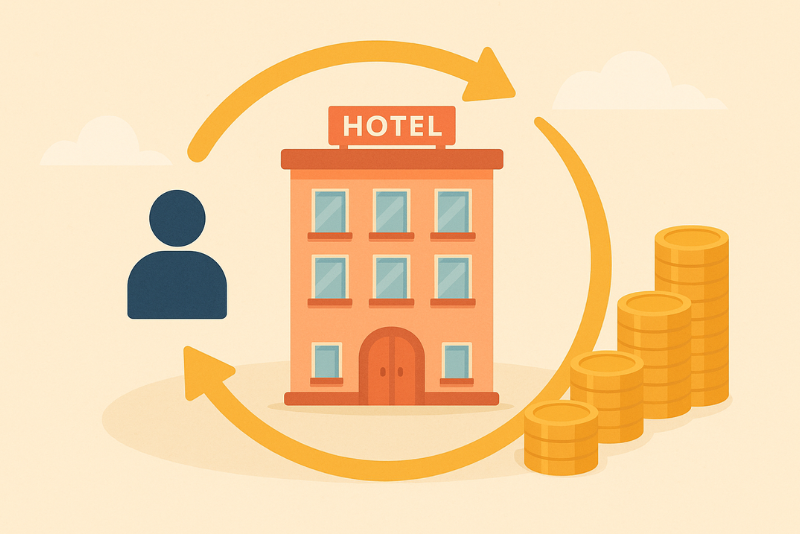
Hotels that build lasting commercial value don’t just respond faster. They build relationships that make guests want to return — and trust the hotel enough to book direct, spend more, and recommend it to others.
Every guest interaction is an opportunity. Not just to resolve a request, but to make someone feel recognized, understood, and remembered.
That is what turns transactions into relationships. And relationships are the most commercially valuable assets a hospitality business can build.
Communication becomes more valuable when it builds continuity, trust, and recognition over time — not just when it gets faster.
Relationships create commercial value — in every industry
This is not a soft idea. It is a pattern that shows up across industries, and the evidence is hard to ignore.
Three businesses — from very different categories — illustrate the same principle: when customers feel genuinely known and valued, they stay longer, spend more, and bring others with them.
Zappos — when loyalty becomes the business model

Category: Online retail — shoes and apparel
The challenge: Competing in a market where the same product could be found cheaper elsewhere
Zappos sold shoes online. In a category where customers compare prices across dozens of sites, the product was never going to be the differentiator.
Any retailer could stock the same shoe.
Zappos made a different bet. Instead of competing on price or range, it competed on how it made people feel. Customer service was not a support function — it was the product. The company built its model around creating loyalty, not processing tickets. Agents were never pushed to end calls quickly. The goal was to solve the problem and leave the customer feeling genuinely looked after.
Harvard Business Review described the founder’s approach as going to extremes for customers. The company even renamed its call centre the Customer Loyalty Team, which says everything about how it thought about the role.
The commercial result was decisive. Zappos grew to more than $1 billion in annual gross merchandise sales. The Stanford Graduate School of Business reported that 75% of daily sales came from repeat customers. Imagine 75% of your hotel guests are repeaters.
When products are easy to compare, relationship quality becomes the real competitive advantage.
The lesson for independent hotels: guests can find another hotel. They can book on an OTA. They can choose a larger brand. The question is whether the relationship you build makes them want to come back to you specifically — not because you are the cheapest option, but because they feel genuinely known there.
Nordstrom — when removing a relationship touchpoint reduces revenue

Category: Luxury retail
The challenge: Understanding what actually drives repeat purchase behaviour
Nordstrom built one of the most recognizable loyalty ecosystems in retail. Its Nordy Club programme had 11 million members, and Reuters reported that those members accounted for more than half of Nordstrom’s total sales — a clear signal that relationship infrastructure had become commercially load-bearing.
What makes the Nordstrom case particularly instructive is what happened when the company trimmed part of its direct-mail rewards programme. The change led to a reduction in foot traffic and was reported to have driven a 3.3% revenue drop in the affected quarter, equivalent to roughly $ 125 million.
Customers who had depended on receiving rewards by mail — a small, routine touchpoint — adjusted their behaviour when that signal disappeared.
The rewards were not enormous. But they were a consistent reminder that the relationship existed. When that reminder stopped, so did the behaviour that came with it.
Customers respond to continuity. Remove a relationship touchpoint, and demand can soften — not because the product changed, but because the relationship weakened.
For hotels, the equivalent is the gap between stays. What happens between check-out and the next booking decision?
If a guest hears nothing and receives no signal that the relationship continues, they are more likely to start from scratch the next time, which usually means going back to an OTA.
Verizon — when systems make relationships scalable

Category: Telecommunications
The challenge: Personalising service at scale across millions of customers
Verizon is a different kind of case. It is not warm in the way Zappos is warm. It is a large telecoms provider with millions of customers and thousands of agents. The relationship challenge is not about tone — it is about whether the right context is available at the right moment.
Verizon deployed tools to determine why a customer was calling before the call was even answered. They then routed customers to more suitable agents. This shortened store visits by roughly 7 minutes, and personalised offers based on their customers.
Verizon’s CEO said the capability could prevent 100,000 customers from leaving in 2024.
A subsequent Reuters report noted that Verizon’s AI assistant for service representatives helped drive a nearly 40% increase in sales through its 28,000-person service team after broader deployment.
The mechanism is the same in both outcomes: when the right context is available at the moment of interaction, the interaction becomes more meaningful.
Better relationships reduce churn, increase sales, and build preference.
A relationship becomes commercially stronger when the system helps your team recognize intent, preserve context, and respond in a way that feels personal — even at scale.
The scale is different from a hotel. But the logic is identical. If a guest calls your front desk and the person answering already knows their preferences, their history, and their last few conversations — that interaction is fundamentally different from one that starts with ‘can I take your name please?’
Hotels should be exceptionally good at this — but most are not
Hospitality is one of the most relationship-rich industries. The stay is personal. It unfolds over time. There are multiple moments — before arrival, at check-in, during the stay, and after check-out — when the hotel can build genuine recognition, trust, and preference.
Independent hotels have a natural advantage over the big chains. They can know their guests by name. They can remember the room a guest prefers, the reason they visit, and the small details that make a stay feel personal. A chain cannot replicate that feeling at scale.
An independent hotel can offer it authentically.
But most independent hotels are not capitalizing on that advantage — because their operation doesn’t support it.
Conversations are split across channels with no shared history. Staff change shifts without passing context. A guest who emailed last week and called this morning is handled as two separate interactions. The information exists somewhere — but it is not organized, not accessible, and not usable when it matters.
Hotels should be exceptionally good at relationship-building. But disconnected operations often make them behave as if every guest interaction starts from zero.
Every time a guest has to re-explain who they are, every time a preference goes unnoticed, every time a conversation is handled without knowledge of what came before — that is a relationship signal sent in the wrong direction.
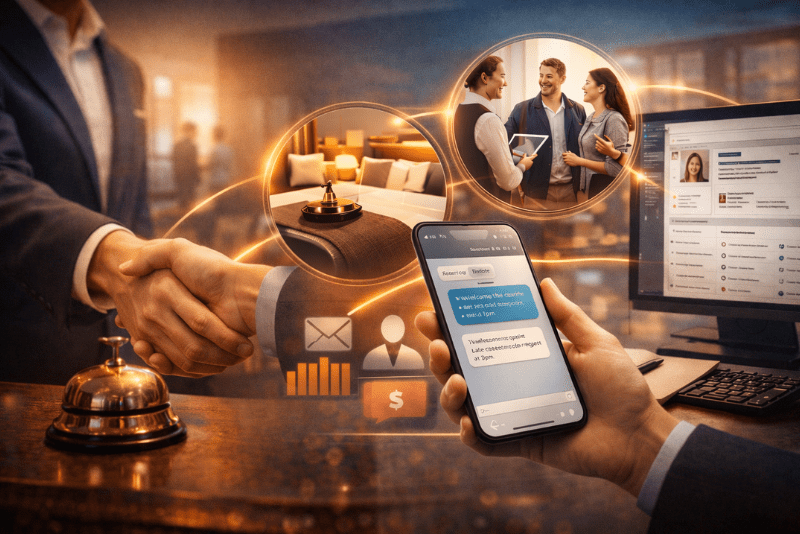
What integrated messaging, CRM, and concierge tools actually change
The solution is not more software. It is the right structure — one that makes relationship continuity operationally possible, rather than dependent on individual memory or heroic effort.
A CRM is where relationship memory is retained and made usable. Not just names and booking dates — preferences, past requests, notes from previous stays, communication history. The things that make the next interaction feel continuous rather than cold.
When you use a hotel CRM like Hotel Growth Engine, teams don’t lose history across channels or shifts. Preferences become usable at the moment of interaction. Communication becomes continuous. Staff effort accumulates instead of resetting.
The CRM is not the relationship. It is what makes the relationship scaleable— even as guests come and go, and staff changes around them.
This is the difference between a hotel that remembers and one that does not. A hotel that remembers can personalise the welcome, surface the right upsell at the right moment, follow up after checkout in a way that feels genuine, and make a guest feel — each time they return — that they are known. Not processed.
What this means for your business
Better guest relationships are not just good service. They are a commercial advantage with a direct impact on your numbers.
When guests feel genuinely recognized and valued, the downstream effects are measurable:
- More repeat bookings — returning guests cost far less to acquire than new ones and typically spend more per stay.
- More direct bookings — a guest who has a relationship with your hotel has a reason to bypass the OTA and book directly, saving you the commission.
- Better upsell conversion — a team that knows the guest can offer the right upgrade or package at the right moment. Relevance converts better than volume.
- Less wasted staff effort — when context is shared, staff spend less time reconstructing history and more time actually serving guests.
- Stronger word of mouth — guests who feel genuinely known are more likely to recommend the hotel. For an independent property, that recommendation carries enormous weight.
- Long-term brand strength — a hotel with a reputation for making guests feel recognized builds a preference that competitors cannot easily copy.
These are not soft outcomes. They show up in RevPAR, direct booking ratios, repeat stay rates, and the margin difference between a guest you acquired through an OTA and one who booked directly because they trust you.
The real takeaway
The hotels that will win over the next decade are not the ones that reply fastest or cover the most channels. They are the ones that make guests feel genuinely known — and build the operational infrastructure to sustain that feeling across every interaction, every stay, and every member of staff.
That means treating communication not as a task to complete, but as a thread that runs through the entire guest relationship. It means making sure that what your team knows about a guest in January remains available and usable when that guest returns in October. It means investing in systems that make your best people’s instincts durable — not dependent on memory or luck.
Relationships are not a luxury for independent hotels. They are your most defensible competitive advantage. A large chain cannot replicate genuine personal recognition at scale. You can — but only if your operations support it.
The hotel wins when communication, service, and guest memory work together — making guests feel known, and making staff effort cumulative rather than disposable.
That is how a relationship becomes an operating advantage. And that is the business worth building.
About Hotel Growth Engine
Hotel Growth Engine helps independent hotel owners turn guest communication into a commercial advantage. We bring together unified messaging, CRM, and concierge tools into a single platform — so your team always has the context they need, every guest feels genuinely known, and your strongest relationships become the engine behind repeat bookings, direct revenue, and long-term growth.